Welding Wire Making Machine
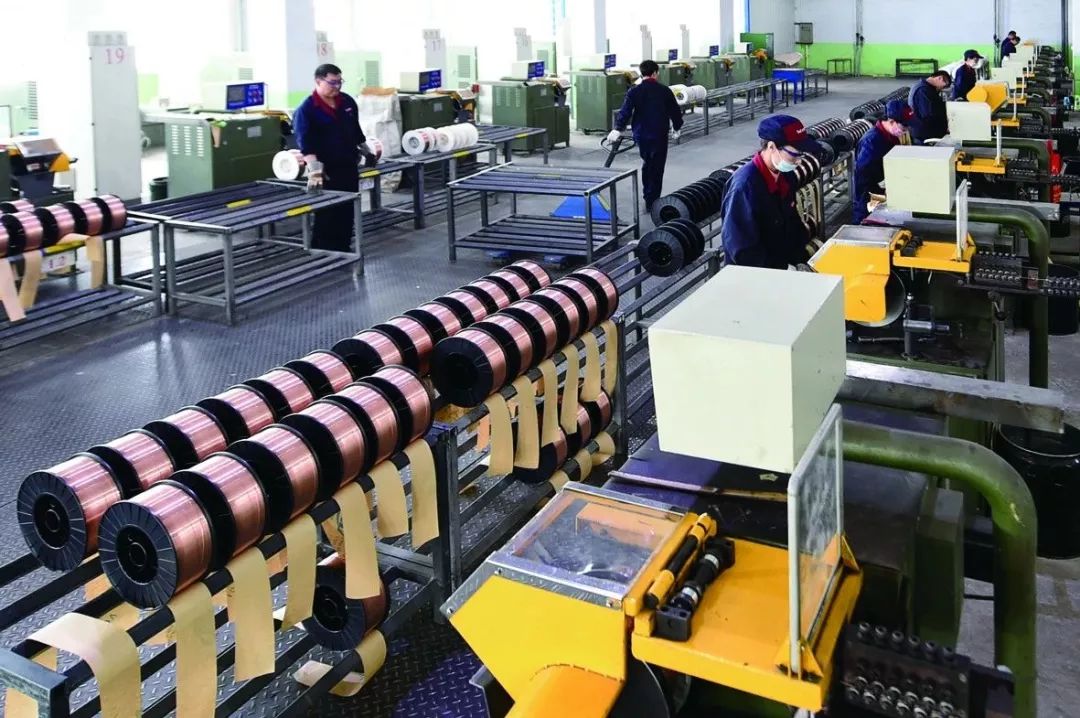
Welding Wire Production Line, Welding Electrode Wire Making Machine
- Product description: Welding Wire Production Line, Welding Electrode Wire Making Machine
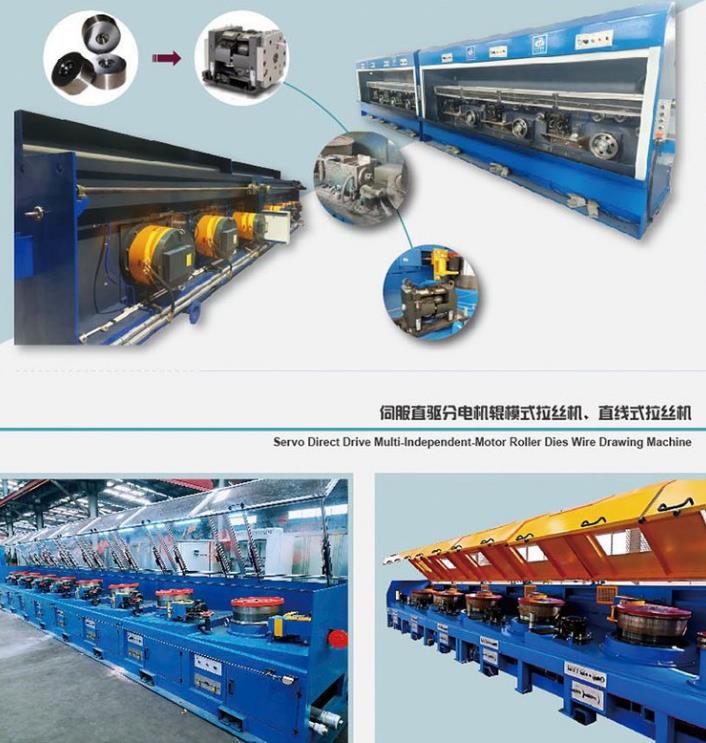
The main material of welding wire is steel, which may be low carbon steel, low alloy steel, or stainless steel. Different types of steel are selected according to different applications. The raw materials are usually steel ingots or billets, which need to be rolled into wire rods first. This step may be completed in the steel plant, but the welding wire plant may need to purchase wire rods as raw materials.
Next is the drawing process. The wire rod needs to go through a drawing machine and gradually reduce its diameter through the mold hole to obtain the required specification of welding wire. Before drawing, acid washing may be necessary to remove the oxide scale, followed by phosphating or boronizing treatment to increase lubrication and prevent breakage during drawing. During the drawing process, temperature and speed should be controlled to avoid excessive work hardening of the material, which may require intermediate annealing to restore plasticity.
Then there is annealing treatment. The drawn welding wire may have work hardening, which affects subsequent processing and performance, so annealing is required. The annealing methods include continuous annealing furnace or hood furnace, and the temperature and time are adjusted according to the material to eliminate internal stress, reduce hardness, and improve ductility.
Surface treatment, commonly copper plating. Because copper has good electrical and thermal conductivity, it can improve the stability of welding arcs and prevent rusting. Before copper plating, it is necessary to clean the oil and impurities on the surface of the welding wire, and then electroplating or chemical copper plating to control the thickness of the coating, usually 0.05-0.3mm. After plating, passivation treatment may be required to improve corrosion resistance.
Roll it into a disc. The processed welding wire needs to be coiled into a disc shape for easy transportation and use. During winding, tension and arrangement should be controlled to avoid loose strands or deformation, and the diameter and width of the coil should meet the standards.
The inspection process is crucial, including visual inspection (for scratches and uneven coating), dimensional testing (diameter and ellipticity), mechanical properties (tensile strength, elongation), chemical composition analysis (to ensure compliance with standards), and welding performance testing (such as arc stability and deposited metal composition). If there is a drug core, it is also necessary to check the filling rate and uniformity of the drug core.
Finally, packaging is used to prevent damage during transportation, usually wrapped in moisture-proof paper or plastic film, and then packed into wooden boxes or pallets.
Contact Us
Contact: Ludy
Phone: +86 18638287933
Tel: +86 18638287933
Add: No. 95 Mingli Industrial Park, Huaiyin District, Jinan City , China